
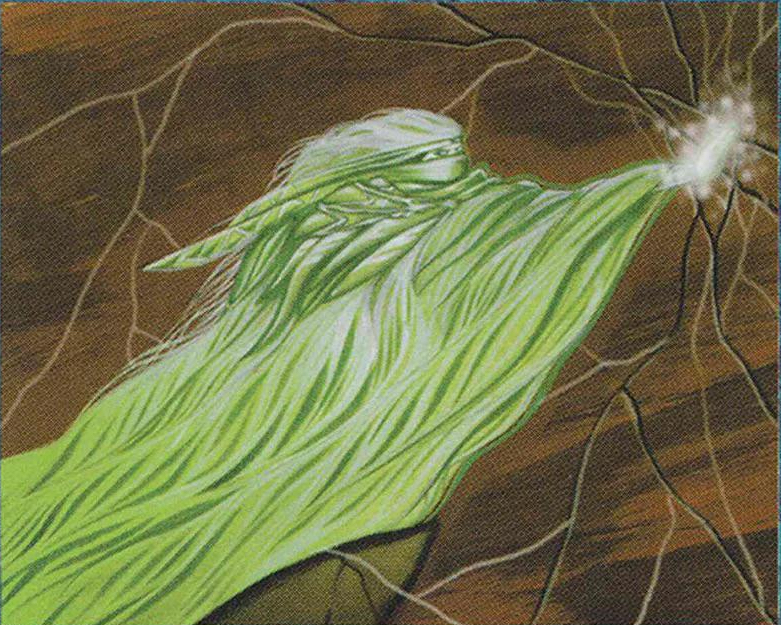
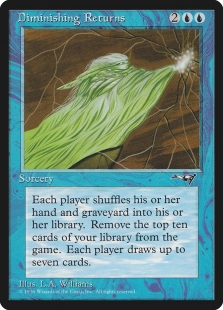
Featured art: Diminishing Returns by L.A. Williams. This time we have an original deck primer by Iñaki Puigdollers, I hope you enjoy it! / Martin
Introduction
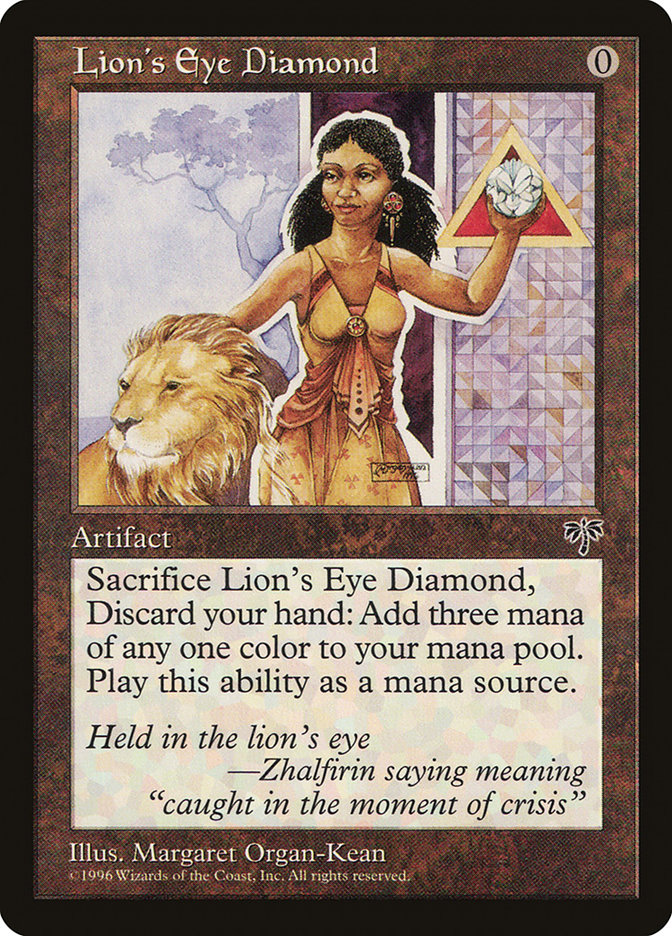
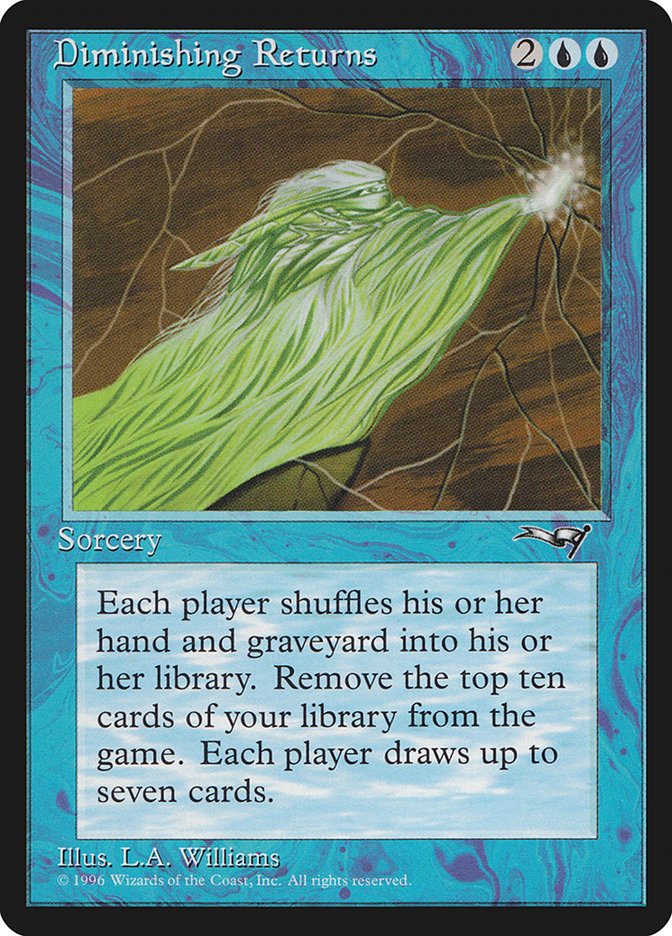
Frantic Returns is an engine combo deck that abuses the storm mechanic. It combines the established Frantic Storm shell with one of the most explosive engines available in Premodern: Lion’s Eye Diamond + Diminishing Returns.
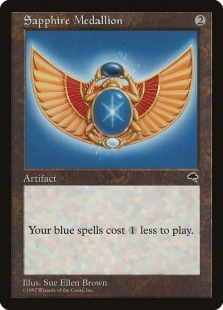
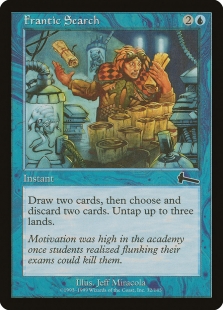
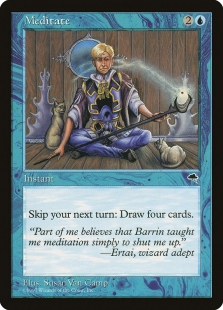
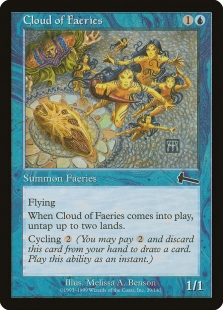
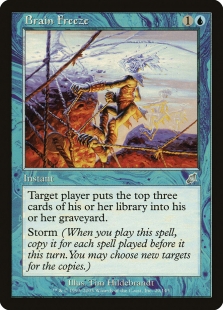
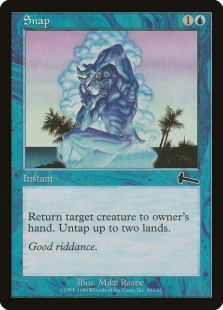
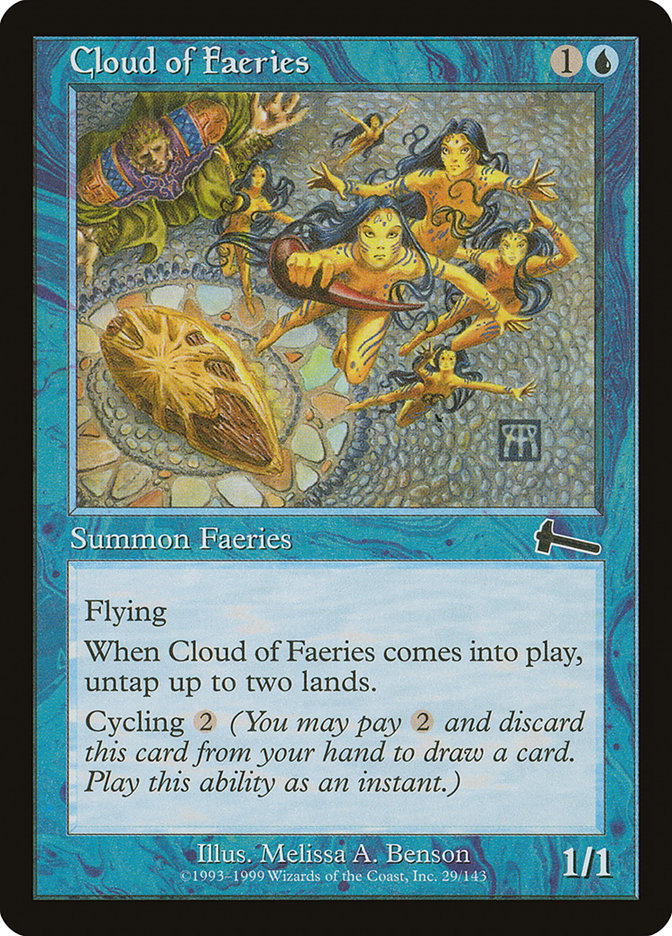
At its core, the deck operates similarly to traditional Frantic Storm. The cost reducers Sapphire Medallion and Helm of Awakening, a.k.a “rocks”, turn Cloud of Faeries, Snap and Frantic Search into mana-generating spells. These spells are then chained together with Meditate and Merchant Scroll until enough resources have been accumulated to finish the game with Brain Freeze.
What separates Frantic Returns from traditional Frantic Storm is its ability to completely reset and reload during a combo turn. A single Diminishing Returns frequently represents:
- A fresh hand of seven cards.
- Additional mana when combined with Lion’s Eye Diamond.
- Additional storm count.
- A reset button that can turn losses into wins out of the blue (pun intended).
Many games are won by resolving a single Returns (even though it’s not strictly needed) but you can, occasionally, play a second Returns in the same turn. The deck therefore attacks from two different angles:
- The Frantic Engine: resolve cost reducers and use untappers to generate mana while chaining Meditates and cantrips until Brain Freeze becomes lethal.
- The Returns Engine: cast Diminishing Returns, generate mana with Lion’s Eye Diamond, draw a new hand and continue comboing with the Frantic engine.
Understanding when to rely on each engine is one of the most important skills required to pilot the deck effectively.
The deck
Here is the version I run currently. I’ll get back to specific card choices later.

SIDEBOARD
Why play Frantic Returns?
Strengths
- One of the fastest combo decks in Premodern.
- Multiple independent combo engines with strong synergy between them.
- Excellent card selection.
- Strong against slower control and midrange strategies.
- Higher win rate than traditional Frantic Storm decks vs difficult match ups such as Sligh and Moneyball Black.
- Immune to graveyard hate.
- Highly rewarding to master.
- Capable of recovering from seemingly unwinnable positions.
- Lower fizzle rate.
How much lower is the fizzle rate?
I have run a very basic simulation comparing a traditional Frantic Storm deck and my Frantic Returns deck. The premises of the model are the following:
- No opponent interaction (counterspells, discard, pressure, or hate cards).
- Basic mulligan decisions based on mana sources, cost reducers, and action spells.
- Identical pilot heuristics for both decks.
- Brain Freeze kills are evaluated using the same storm-count thresholds for both lists.
- Diminishing Returns is modeled as a recovery engine that can generate a fresh seven-card hand at the cost of exiling ten cards from the library.
Under this model, Frantic Returns produced a 16.7% lower combo-turn fizzle rate compared to traditional Frantic Storm. While this is not exact science, it tracks with my personal experience.
Weaknesses
- Non-deterministic combo deck.
- Requires set up that can be answered with format staples (like Pyroblast or Naturalize)
- Can still fizzle occasionally.
- Diminishing Returns introduces variance.
- Gaea’s Blessing can be difficult to beat.
- Requires significant practice and repetition.
How the deck wins
You need to resolve one rock (I’ll use the term indistinctively when referring to either Sapphire Medallion or Helm of Awakening) or ideally two to get your spells reduced to cost one mana or two at maximum. Thereafter you generate critical storm count by casting draw spells and spells that will untap your lands to generate additional mana (or Lion’s Eye Diamond, more on this later) and finalize with one or more Brain Freeze. Usually, two Brain Freeze are more than enough. Whenever possible, it is recommended to finish your combo turn with the singleton Words of Wisdom to effectively kill your opponent in that turn (i.e., your opponent loses when they are going to draw a card and their library is empty).
Brain Freeze math
The table and formula below are extracted from the awesome Frantic Storm Primer created by the Moxfield/Discord user pegpeg66. I encourage you to read it as a complement to this article to gain a broader perspective on the Frantic Storm archetype overall.
| Spells before first Brain Freeze | First Brain Freeze | Second Brain Freeze | Total cards milled |
| 5 | 18 | 21 | 39 |
| 6 | 21 | 24 | 45 |
| 7 | 24 | 27 | 51 |
| 8 | 27 | 30 | 57 |
| 9 | 30 | 33 | 63 |
| 10 | 33 | 36 | 69 |
| 11 | 36 | 39 | 75 |
| 12 | 39 | 42 | 81 |
| 13 | 42 | 45 | 87 |
| 14 | 45 | 48 | 93 |
| 15 | 48 | 51 | 99 |
| 16 | 51 | 54 | 105 |
| 17 | 54 | 57 | 111 |
A turn-three opponent usually has around 50-51 cards remaining in their library. This means that seven spells followed by two Brain Freeze is typically lethal. Pro tip: Always count your opponent’s actual library size rather than relying on theoretical numbers.
An important reminder is that your opponent’s spells also increase storm count. This frequently matters against heavily interactive decks that operate at instant speed, like permission heavy decks (e.g. decks playing countermagic), such as Dreadnought, Psychatog or Landstill. Sometimes your opponent’s interaction is what pushes Brain Freeze into lethal territory.
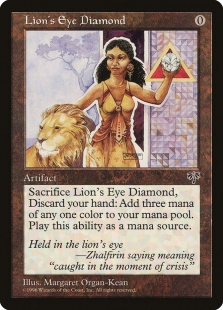
The Lion’s Eye Diamond + Diminishing Returns engine
This broken interaction is the primary reason to play the deck. The most common sequence looks like this:
It is recommended to fire off your Returns with at least one Rock on the table, ideally two. For this sequence I will assume you have at least one.
- Cast as many mana generating cards you have in your hand (Frantic Search, Cloud of Faeries and Snap).
- Cast Diminishing Returns.
- Hold priority.
- Sacrifice Lion’s Eye Diamond.
- Add three blue mana.
- Resolve Diminishing Returns.
- Draw seven new cards.
- Continue comboing.
In practice, Lion’s Eye Diamond functions much closer to Black Lotus than to a traditional mana source. You normally do this after having depleted the rest of your hand, so the discard part is rarely a liability.
Why three Brain Freeze is enough
One of the most common questions about the list is why it plays three Brain Freeze instead of four. Isn’t it risky to exile all your win conditions after resolving a Diminishing Returns? The answer is no, with three Brain Freeze we are statistically safe. Here is why: After resolving Diminishing Returns there are typically around 45 cards left in the library. With three Brain Freeze remaining in those 45 cards, the odds of exiling all three copies to Diminishing Returns is approximately 2.8 %. A fourth Brain Freeze reduces that probability even further, but at the cost of replacing a card that actively helps the deck combo. Comparatively, if we were playing only two Brain Freeze the odds of exiling all of them would be 18.0 %, which means that one in every five times you cast Diminishing Returns you’d be left with no win conditions left in your deck, on average. This is too big of a risk which makes three the sweet spot in my opinion.
When not to cast Diminishing Returns
The most common mistake one can make is casting Diminishing Returns too early or plainly when uncalled for. Before casting it, ask yourself:
- Am I generating enough mana to continue afterwards? This is pretty much dependent on the number of rocks you have on board before firing it off.
- Is my current hand actually worse than seven random cards? Can Frantic Search or Meditate solve the problem instead? It is often recommended to correctly use your resources before casting Returns.
- What happens if Returns exiles critical pieces? This is an important question in match-ups like Sligh where Words of Wisdom plays a very important role.
Diminishing Returns is often strongest as a combo extension rather than a combo starter. Many successful combo turns involve:
- Playing rocks.
- Building mana/chaining untappers.
- Casting Meditate.
- Using available resources.
- Casting Diminishing Returns only once resources begin running low.
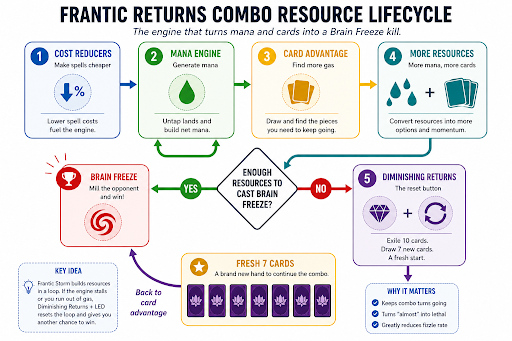
Returns is generally not a panic button (although sometimes it will be!), but the glue that holds the deck together and minimizes fizzle rate to a level close to 0%
Mulligan guide
Mulligans are one of the most difficult aspects of the deck and generally in Magic I would say. Many hands that appear powerful are often traps. Likewise, many hands that appear mediocre are often excellent keeps. Note that mulliganing can vary heavily post sideboard games when you know what your opponent is up to. For this exercise we will focus on mulliganing in game 1 without any additional information of your opponent’s deck.
Automatic keeps
The ideal hand consists of 2 lands + 2 rocks + 1 Meditate or Diminishing Returns + 1 mana generation effect + 1 cantrip.
My general advice is to keep:
- 2 lands + rock + action.
- 1 land + rock + 2 cantrips.
- 3 lands + rock + Cloud of Faeries or Frantic Search + Meditate
- Rock + Meditate + mana.
These hands almost always develop into a functional combo turn.
Automatic mulligans
Generally, you should mulligan:
- One-land hands without at least two cantrips.
- Hands containing Lion’s Eye Diamond but no clear plan.
- Hands with multiple Frantic Search/Meditates/Diminishing Returns and no setup.
Understanding Lion’s Eye Diamond hands
One of the biggest mistakes in evaluating hands is overvaluing Lion’s Eye Diamond, as it does not automatically make the hand a keeper. Specifically, a hand containing a Diamond and Diminishing Returns is not necessarily stronger than a traditional Frantic Storm hand. The question when evaluating a hand with Diminishing Returns is always: “How am I generating enough mana to make Returns good?” If the answer is unclear, the hand may be weaker than it looks.
Card choices
The main deck
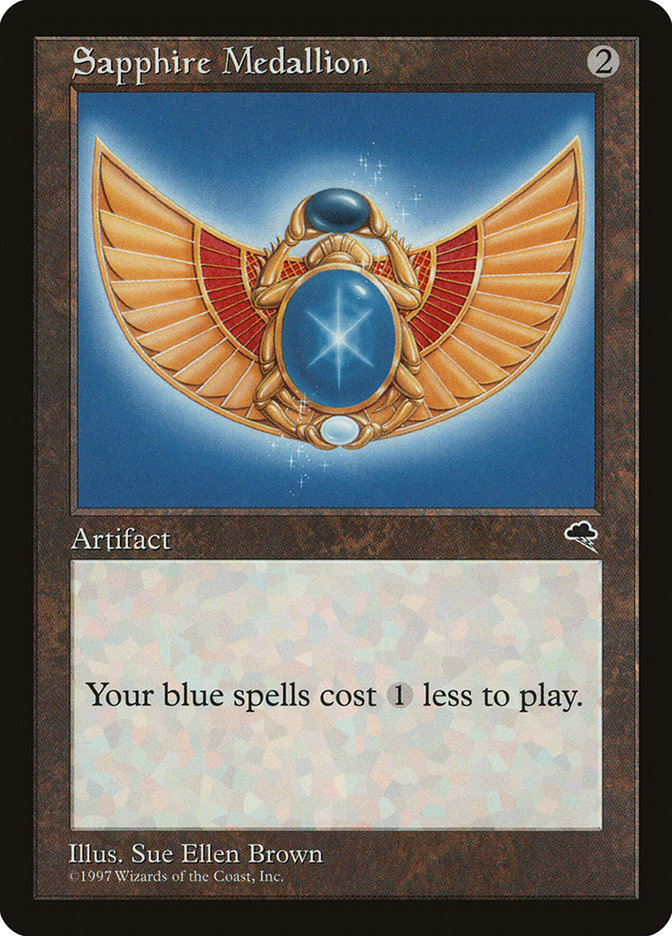
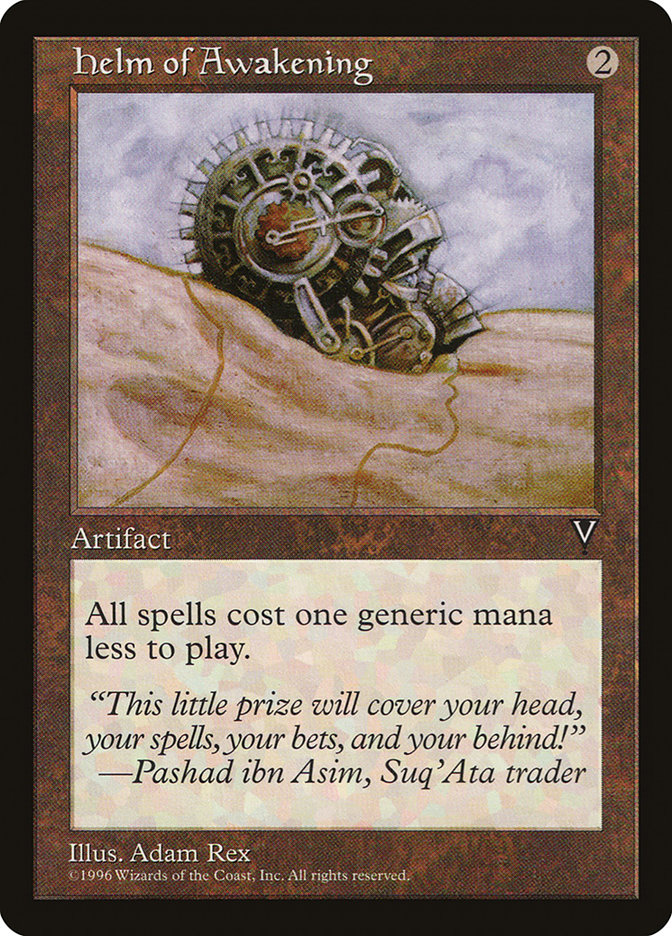
The rocks: Sapphire Medallion and Helm of Awakening
These are the enablers of the deck and you need them to execute your plan, whichever it is! While they serve the same purpose when going off, note that there is a fundamental difference. Helm of Awakening is not only a symmetrical effect (be mindful of reducing your opponent’s card costs) but it also reduces any spell cost, including future rocks! This is very important because it allows you some crazy sequencing like the following:
Turn 1 Land
Turn 2 Land + Helm of Awakening
Turn 3 Rock + Cloud of Faeries + Meditate
The line above is great because the odds of hitting your third land and potentially more action to get going are very high. All in all Helm has great advantages but comes with associated risks.
Mana generators: Frantic Search, Cloud of Faeries, Snap, Lion’s Eye Diamond
These are the cards that will allow you to play an immense amount of cards in a single turn. We can split them in two categories: (land) untappers and fast mana.
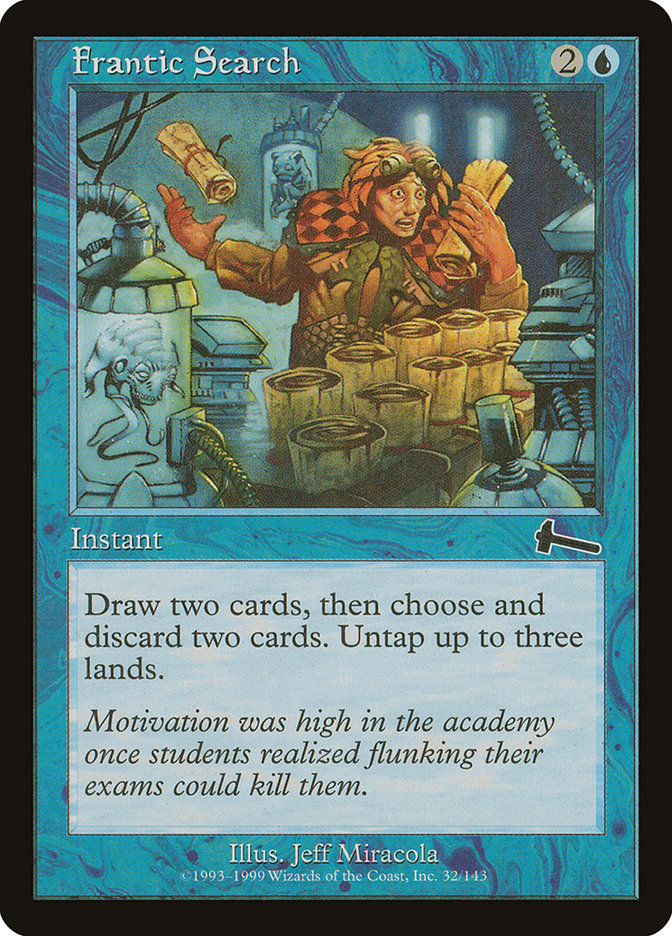
The untappers (Frantic Search, Cloud of Faeries and Snap) will only generate mana if you have at least one rock on the board. The best untappers are Frantic Search and Cloud of Faeries, simply because they have no further requirements (than having a rock) to extract value out of them. Frantic Search is definitely the better of them because in the process it allows you to filter unnecessary cards generating card advantage in the process (if you discard two lands when you have already made a land drop, or discard redundant rocks, and in exchange you get two blue cards spells card advantage). However, you will not be able to play Frantic Search with only one mana available and just one rock on board, in this situation Cloud of Faeries has an edge.
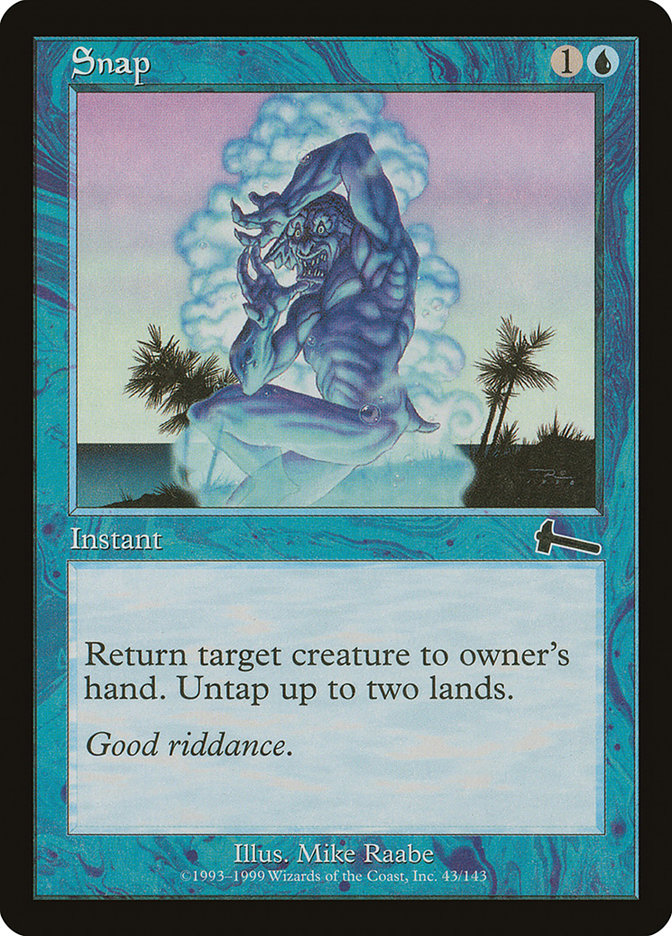
While Snap requires more setup – you typically want to Snap back your Cloud of Faeries only to recast it right away, generating additional mana and storm – it is also the most flexible of them all. Snap can also be played on your opponent’s creatures to play around their own removal. If you play Snap on your Cloud of Faeries and your opponent plays a removal piece on your Cloud of Faeries in response, your Snap will not resolve and you will not be able to untap your lands. By playing Snap on your opponent’s creature you will at least get a 2×1 if your opponent plays their removal (on their creature) in response.
Lion’s Eye Diamond is the only card we have in the fast mana category. We have already mentioned how well it interacts with Diminishing Returns, but that is not the only interaction. Another way to turn Lion’s Eye Diamond into a Black Lotus is by cracking it after you play a Meditate or a Merchant Scroll (holding priority). From my experience though, cracking it with just a Meditate on the stack leads to fizzle more often than not. However, you can do things such as:
- Play a Lion’s Eye Diamond.
- Play a Merchant Scroll.
- Holding priority, play a Meditate.
- Holding priority, crack Lion’s Eye Diamond for UUU.
- Let the Meditate resolve.
Now, after knowing which four cards your Meditate brought you, you can decide whether the best thing to fetch with Merchant Scroll is another Meditate, a Frantic Search or maybe a Brain Freeze.
There is also a small additional perk attached to Lion’s Eye Diamond: it does not need to be tapped to generate mana. You simply have to sacrifice it, which makes it the perfect target to tap for a Tangle Wire.
Meditate
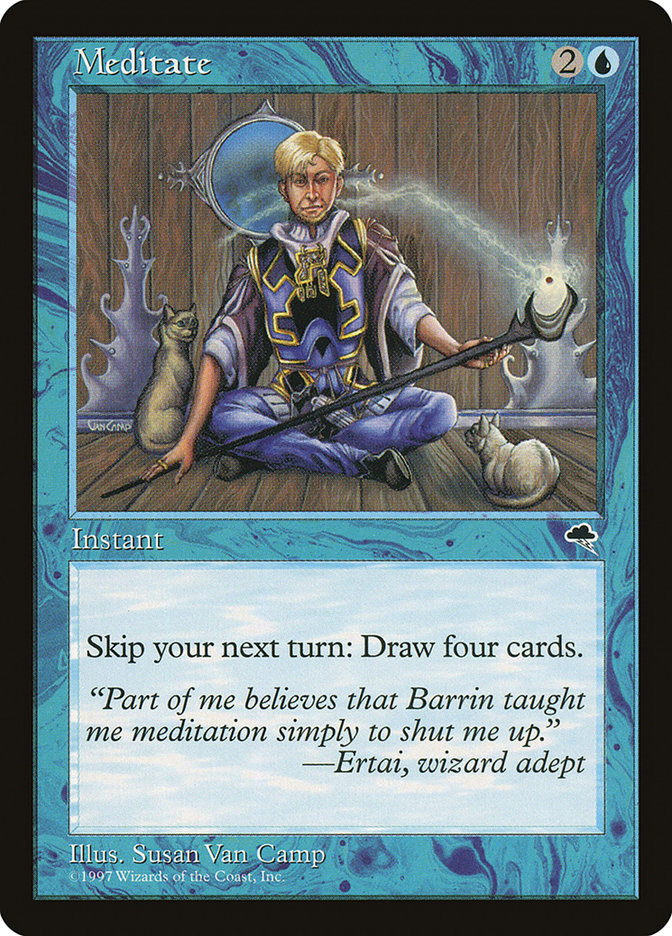
This is your main source of card advantage. You will win a surprising amount of games by simply chaining Meditates. Meditate can also be played as a value tool to set up your combo turn. If your opponent is not applying much pressure, you can play a Meditate to draw four cards by yielding one turn and try to kill on the way back. This is normally done at your opponent’s end step but it can also be done in your main phase if you are low enough on cards (you don’t want to discard down to hand size and lose valuable resources) and maybe you are missing a land drop. Most successful combo turns involve at least one Meditate.
Merchant Scroll
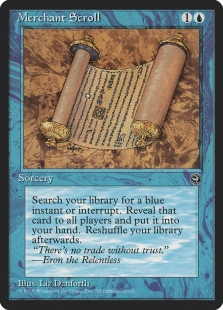
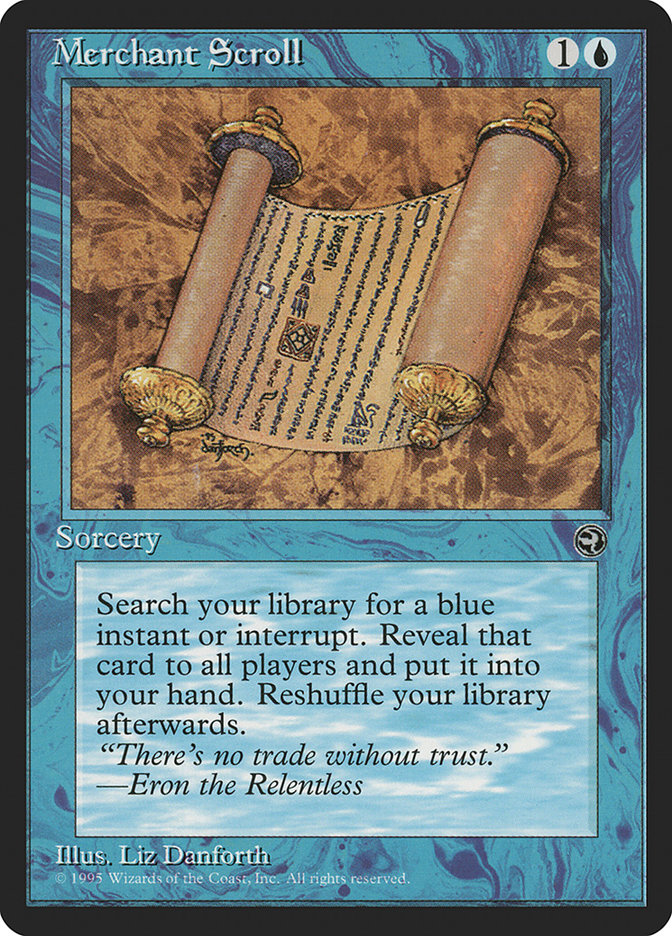
This is our only tutor and the glue holding the deck together. Common targets are Frantic Search, Meditate, Brain Freeze and Words of Wisdom (if you are going for the insta-kill). But it can also be very good at finding interaction pieces, especially in post sideboard games.
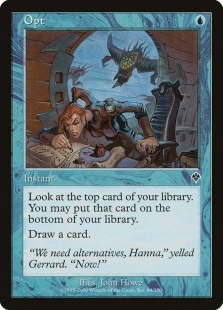
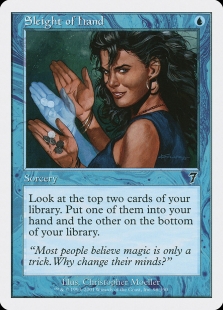
The cantrips: Opt and Sleight of Hand
The cantrips play three important roles in the deck:
- They prevent you from time-walking yourself on turn 1. Frantic Storm plays very few one-mana spells, partly to leverage rocks as much as possible. However this means you will just usually just play land and pass on turn 1. By playing one-mana cantrips you can instead use your first turn to start sculpting your hand.
- They minimize fizzle rate. Thanks to the Xerox Principle, you can effectively exchange one land in your deck for two low cost (preferably one-mana) cantrips. This reduces your land count but decreases the fizzle rate later on since you will be drawing cantrips instead of excessive lands more often when going off. The downside is that every cantrip consumes a valuable resource, one mana, so you need to plan ahead and be careful how you sequence them.
- They increase the number of keepable hands. A hand with four lands and three spells is more often than not an insta-mulligan. However, if that hand has two lands and two cantrips plus three other spells your hand looks more like a keeper. Minimizing mulligans is important in a deck whose way of winning is by amassing a critical count of spells.
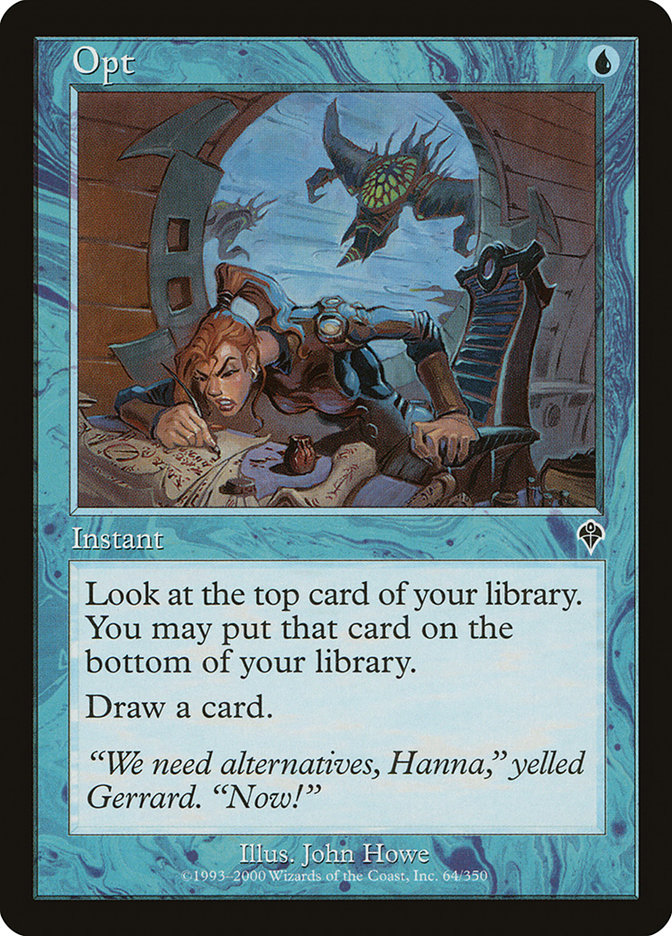
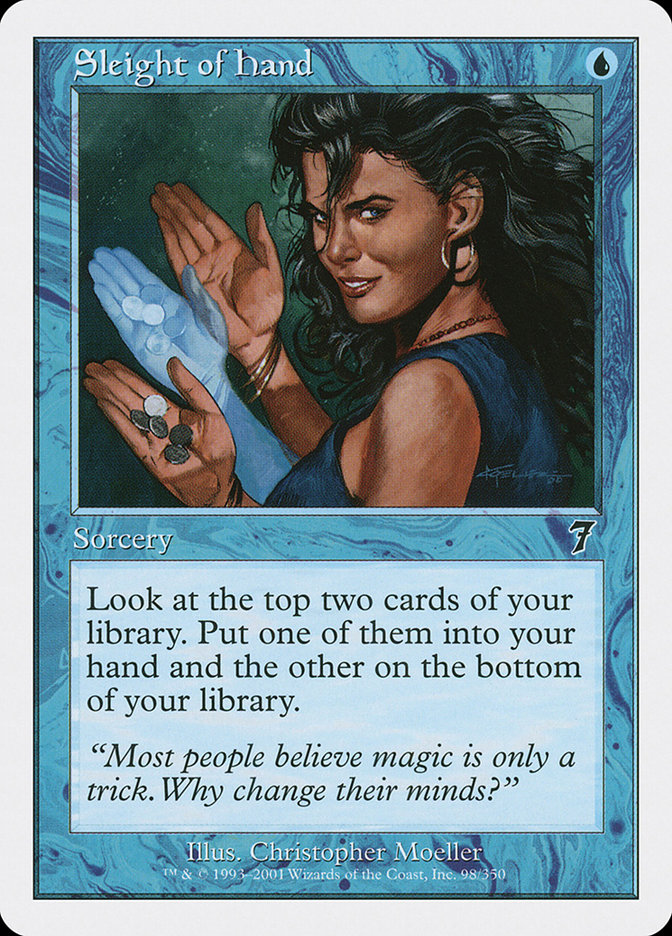
Notably, Opt is the preferred cantrip here because, despite showing the fewer cards upfront, even though it goes as deep as Sleight of Hand, the its instant speed grants a lot of flexibility when you need to respond – or even go off – after your opponent moves.
Brain Freeze
This is the primary win condition and the deck is built around maximizing its effectiveness. In some corner cases, Brain Freeze can have additional utility. For instance if you are tight and need to refuel while holding an Accumulated Knowledge in hand you can Freeze yourself for a certain amount to try to hit some extra copies of Accumulated Knowledge and draw extra resources. This is risky, however, because milling out important cards would require to play Diminishing Returns to have them back and maybe you don’t have them in the deck.
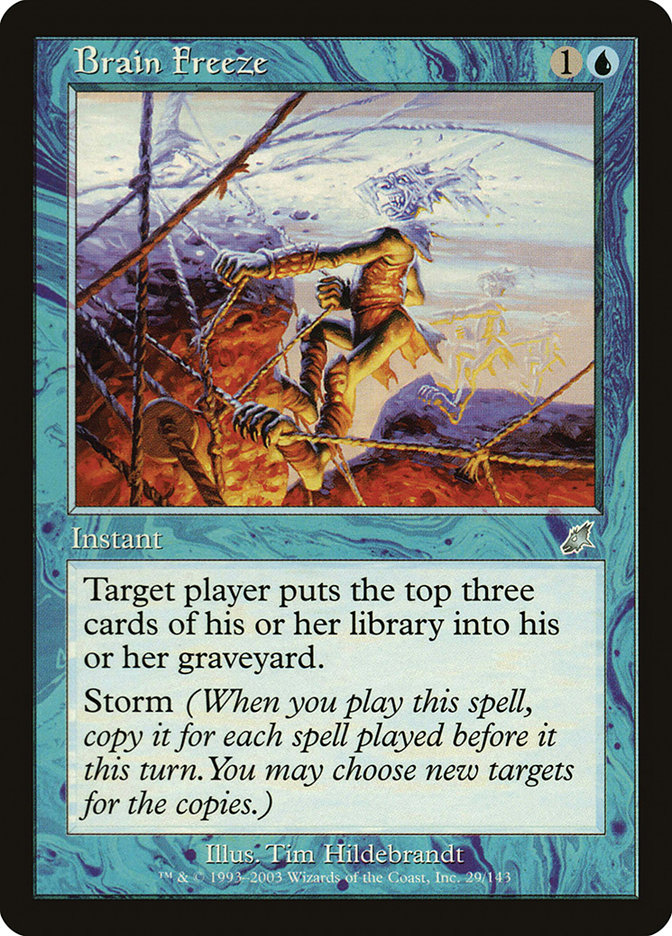
Brain Freeze can also hinder the game plan of some match-ups like Angry Hermit. You can Brain Freeze after they have played Krosan Reclamation to deplete their library and win because they would draw from an empty library. Another nice interaction is messing up Portent piles from your opponent. If your opponent has decided not to shuffle their Portent pile, it looks like a good opportunity to mill the top of their deck out, stifling their immediate plans. Lastly, even though it’s not a very common card in today’s metagame, Brain Freeze can act as a hard counter to cards that put cards on top of the library, e.g., Enlightened Tutor.
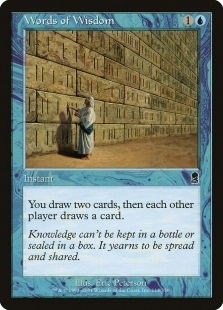
Words of Wisdom
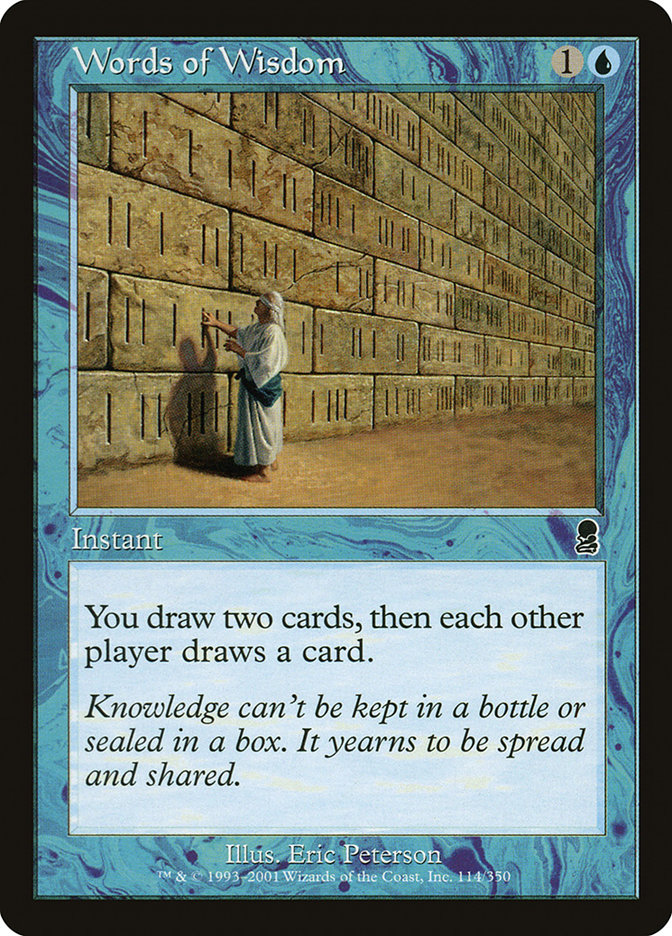
The main role of the card is to be able to kill instantly after milling out your opponent. However, it is not rare that you just play it during the set up stage to dig a bit deeper looking for the missing pieces to go off. n this scenario, however, , giving your opponent an extra card can actually be a relevant downside.
Diminishing Returns
Our “Time Spiral at home” and the card that gives the deck its identity in front of the more traditional Frantic Storm lists. At this point, I have already talked a lot about the card and its play patterns over the article and there is not much I need to add.
The Sideboard
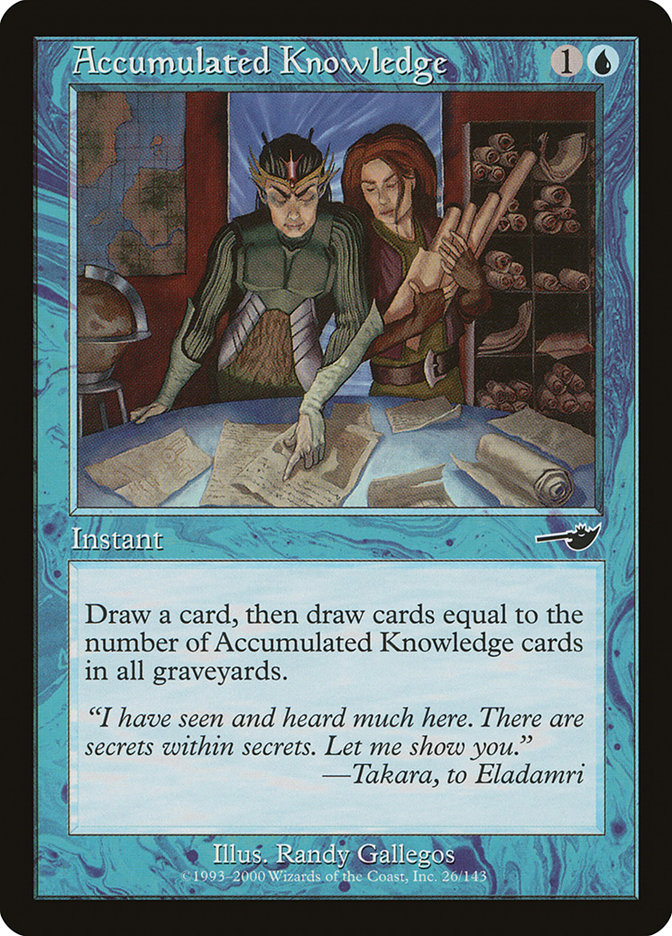
Accumulated Knowledge
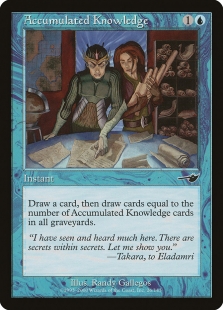
Traditionally played in the main deck of Frantic Storm, but here it’s the centerpiece of the transformational plan of the deck. It is used to substitute the Diminishing Returns package in sideboard games versus highly interactive decks. They allow you to play your combo turn protected without going all-in with Lion’s Eye Diamond. If you are facing an Accumulated Knowledge mirror, try not to be the first one playing it. The later you play them the more cards you will draw, and the fewer cards your opponent will draw.
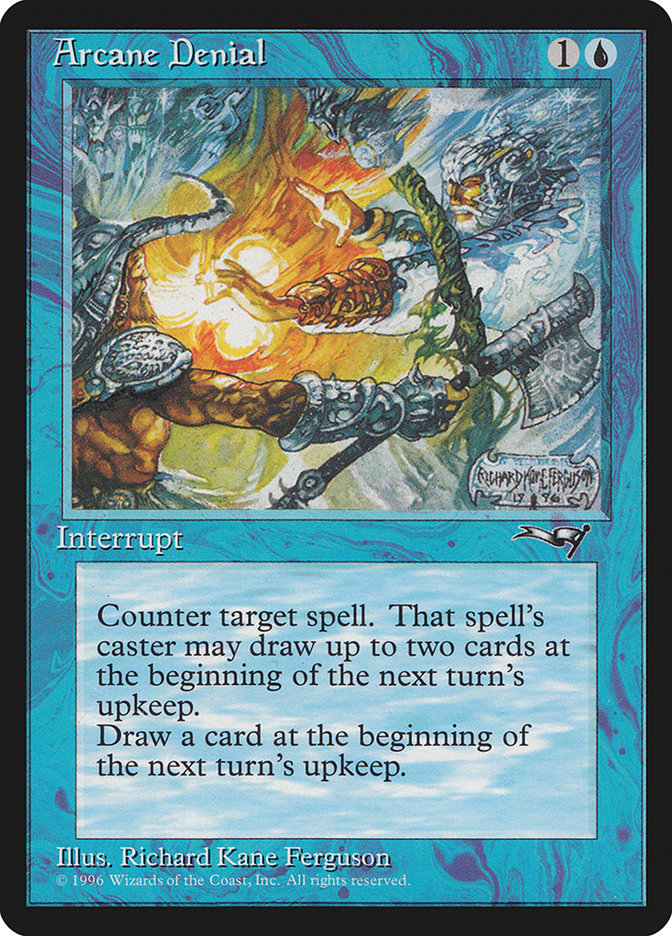
Arcane Denial
This is quite likely the best permission spell for this deck for the following reasons:
- It gets its cost reduced by the rocks.
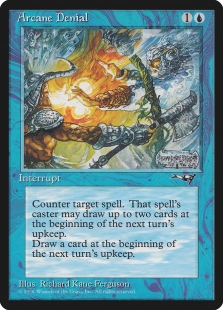
- You can counter your own cards for an “Ancestral Recall” effect. A common scenario is the following: you play a spell, your opponent attempts to counter it, you respond by Arcane Denial your own spell (which was going to be countered anyways) and draw three extra cards in the next upkeep step.
- It is a hard counter. Some of the big targets for Arcane Denial are Armageddon, Orim’s Chant, Abeyance, Disenchant effects and other permission spells.
Chain of Vapor
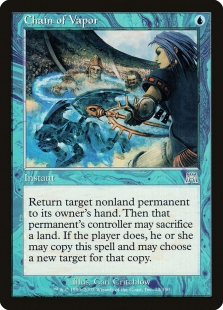
A great universal bouncer. Very good vs dark ritual-powered openings (take that Hippy back!). Be mindful that your opponent can return the favor, e.g., bounce back a Rock on the board, potentially messing up your hard-earned combo mana. I have been considering a 1/1 split of Chain of Vapor and Rushing River mainly because of the potential symmetrical effect of Chain of Vapor, but the fact that it can be played as early as turn 1, or by just 1 mana without further set up, makes Chain of Vapor incredibly powerful and flexible.
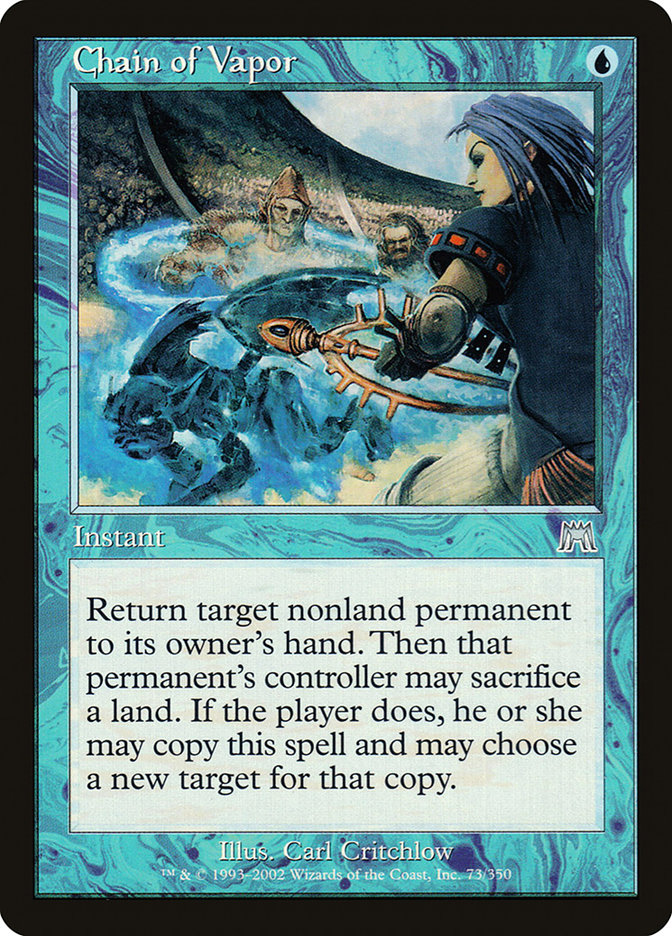
Not to forget that, in the context of storm, Chain of Vapor has a secret mode! You can bounce your free permanents and replay them to increase your storm count. For instance, if you have one Lion’s Eye Diamond and two Cloud of Faeries on the board, you can cast Chain on your Diamond, sacrifice a land and bounce one Cloud of Faeries and repeat the process to bounce back the second Faeries, and replay all of them. In this scenario, your Chain generates four storm and nets one mana. Bonus points if you replicate your Chain of Vapor one last time to bounce back a piece of hate your opponent has in play!
All in all, I think Chain of Vapor is one of the most powerful blue cards in the whole format.
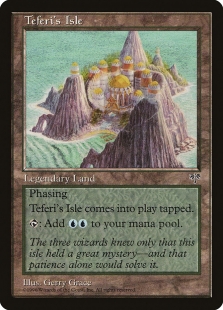
Teferi’s Isle
You might be used to seeing these lands in the main deck of more traditional Frantic Storm decks. However, in my experience this is a high variance card. It can win you many games but it can also make you lose some of them by itself. The come into play tapped effect is just too costly if you count on it as part of your foundational manabase. However, in post sideboard games it is always good to have extra land drops given the grinder nature they have and Isle is both a land drop and a pseudo-rock immune to artifact hate.
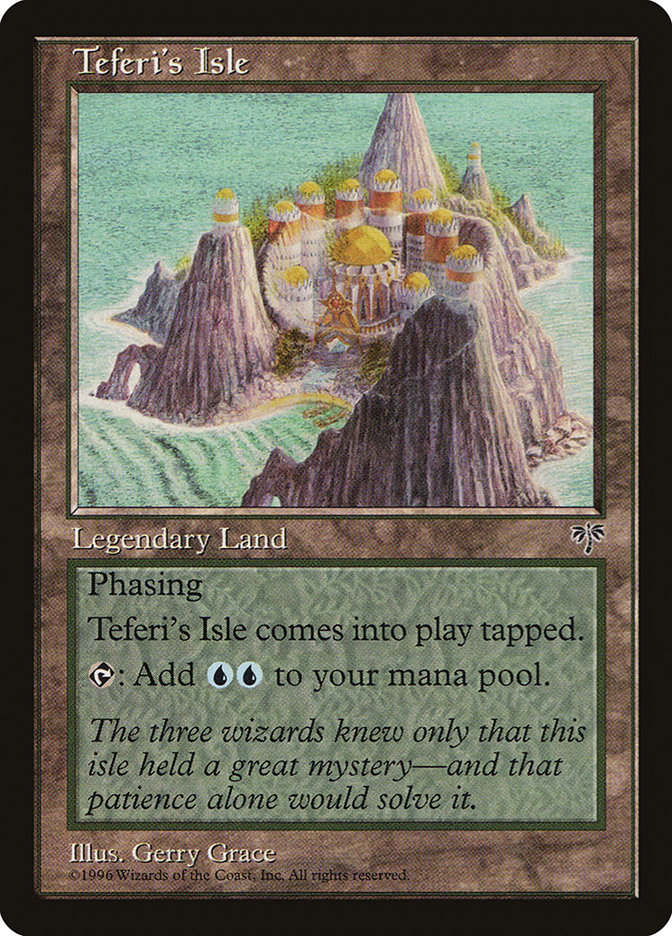
A nice little trick you can make if you have the two Isle in hand is to play them in two consecutive turns. Even though they are Legendary, because of phasing you will be able to always have one on board! Be careful of Wastelands though, as this would be your only target.
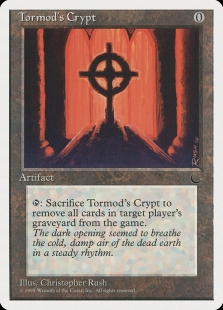
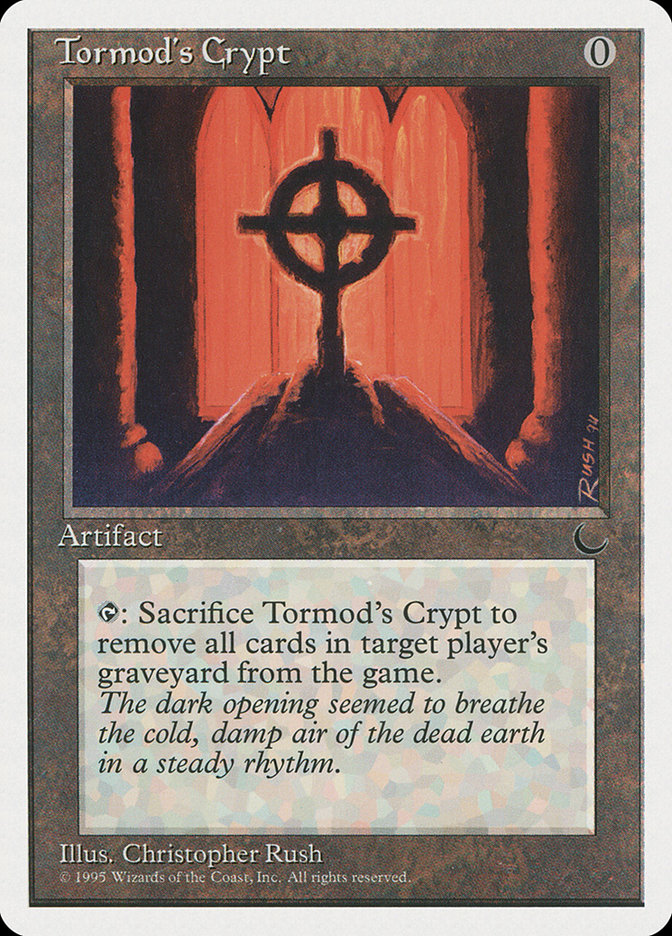
Tormod’s Crypt
A necessary evil in the deck and your primary tool to beat Gaea’s Blessing. Go check the section below for the details.
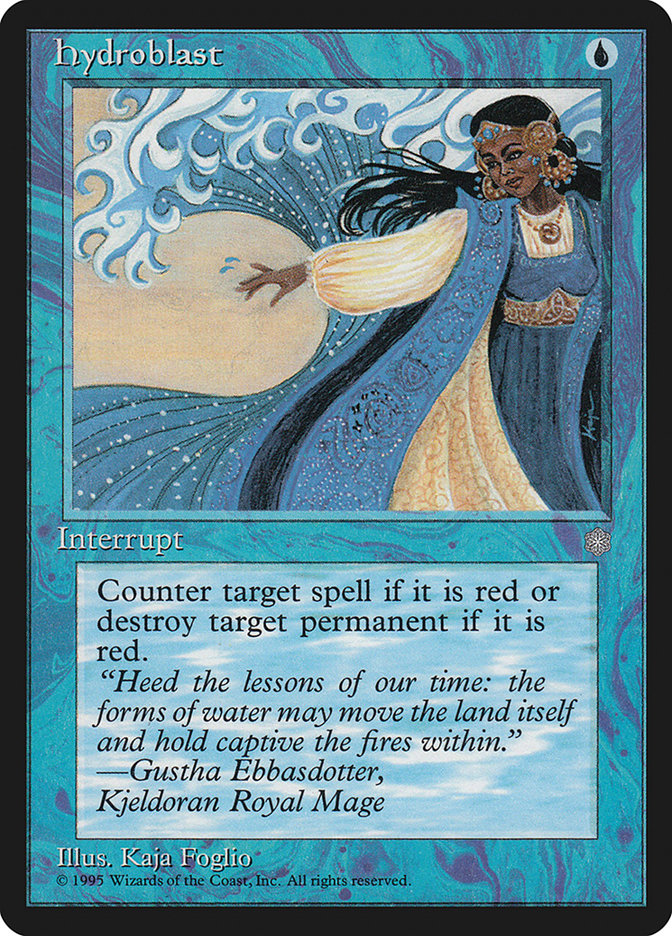
Hydroblast
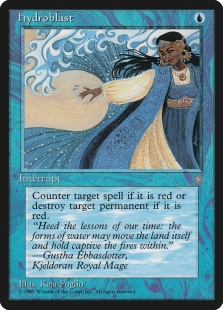
This is a concession to red decks. They can go faster than you and you need a way to top the early aggression (looking at you Goblin Lackey). They are also important tools to fight your opponent’s Pyroblast and Pyrostatic Pillar. In our case, Hydroblast is strictly better than Blue Elemental Blast because you can target any permanent with Hydroblast to generate an additional storm if ever needed.
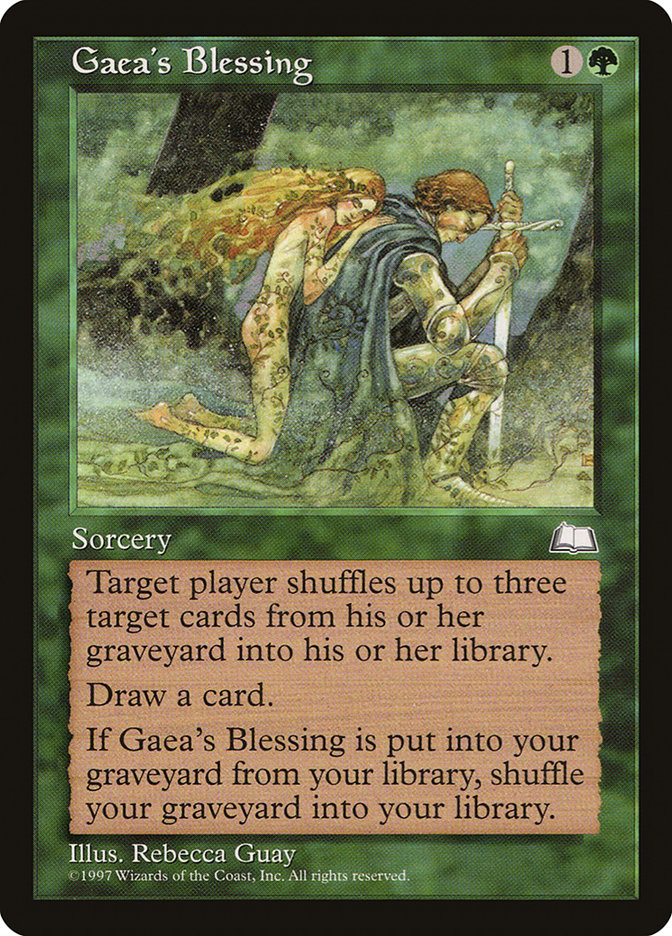
How to beat Gaea’s Blessing
No Brain Freeze storm primer would be fully finished without dedicating a section on how to beat Gaea’s Blessing. Gaea’s Blessing is the single most important card to understand when piloting Frantic Returns, or any Brain Freeze deck for that matter. Any deck can play it, and many opponents will bring it in specifically to fight Brain Freeze. Whenever Gaea’s Blessing is put into a graveyard from a library, its triggered ability goes on the stack. If that trigger resolves, the graveyard is shuffled back into the library, undoing much of your work. Fortunately, we have the tools to fight it through.
When you don’t know how many copies they have
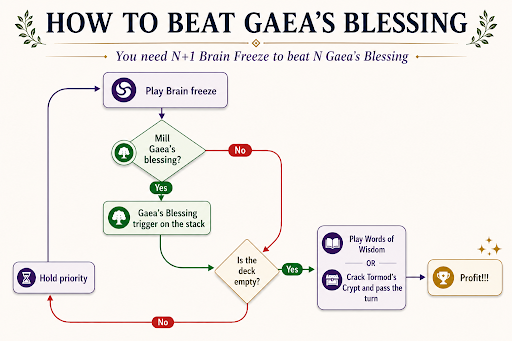
As a general rule, you need one more Brain Freeze than the number of Gaea’s Blessing your opponent has. The process works as follows:
- Cast Brain Freeze.
- Allow the copies to begin resolving, milling three cards at a time.
- Eventually a Gaea’s Blessing is milled.
- The Blessing trigger goes on the stack.
- Do not allow the trigger to resolve.
- Cast another Brain Freeze with the Gaea’s Blessing trigger still on the stack.
- Repeat the process for every additional Gaea’s Blessing that is milled.
Each new Brain Freeze continues milling cards while all previously created Blessing triggers remain on the stack waiting to resolve. If your opponent eventually has no cards left in their library, you have two options:
- Cast Words of Wisdom and force them to draw from an empty library.
- Activate Tormod’s Crypt targeting them and exiling all the cards in their graveyard while all Blessing’s triggers are still on the stack. This way, when they resolve there’d be nothing to shuffle back. Then, you can pass the turn and let them naturally draw from an empty library.
When you know how many copies they have
Once you know the exact number of Blessings, you know exactly how many Brain Freeze are required. The procedure is the same:
- Cast Brain Freeze.
- Leave every Blessing trigger on the stack.
- Continue casting additional Brain Freeze whenever another Blessing is milled.
The difference is that you know when you’ve reached the final Blessing. Once the last known Gaea’s Blessing trigger has been placed on the stack, you can safely:
- Activate Tormod’s Crypt to exile the opponent’s graveyard.
- Let all remaining Gaea’s Blessing trigger resolve.
- Allow the remaining Brain Freeze copies to finish resolving.
Since the graveyard is already gone, every pending Blessing trigger will resolve without accomplishing anything. The remaining Brain Freeze copies will then finish milling the opponent normally. This means that, effectively, you need one less Brain Freeze to beat a known number of Gaea’s Blessing.
Sideboard philosophy
The sideboard is arguably the most unique aspect of the deck. Many combo decks simply bring in answers. Frantic Returns frequently transforms its engine completely. Against highly interactive opponents we often remove the full package of Lion’s Eye Diamond and Diminishing Returns and become a more traditional Frantic Storm deck featuring Accumulated Knowledge, Teferi’s Isle and Arcane Denial. This reduces explosiveness while setting you up for an uphill grindy battle.
Sideboarded games are typically more interactive and tend to go longer. You should expect that your opponent will bring more disruption pieces. As such, going all-in with Lion’s Eye Diamond can be a very risky idea. In these match ups it’s safer to take a grinder approach and protect your combo with your own pieces of interaction. Learning when to abandon the Diminishing Returns plan is one of the most important skills in piloting the deck. Hopefully, I can help you have an idea with the next section.
Sideboard guide
The following table summarizes sideboarding for different matchup (the table is wide, so you may need to scroll). You can also download a complete sideboarding guide here.
| Card | Elves | Sligh | Replenish | Oath Ponza | Moneyball | Goblins | Dreadnought | Enchantress | Landstill | Psychatog | GaT/5CW | GW Madness | Rock/BW |
| Sapphire Medallion | |||||||||||||
| Helm of Awakening | -1 | ||||||||||||
| Lion’s Eye Diamond | -4 | -4 | -4 | -1 | -4 | -4 | -1 | -4 | -4 | -4 | -1 | ||
| Frantic Search | |||||||||||||
| Cloud of Faeries | -1 | -2 | -1 | -1 | -1 | -1 | |||||||
| Snap | -3 | -1 | -3 | -1 | -3 | -2 | |||||||
| Opt | -1 | -1 | |||||||||||
| Sleight of Hand | -2 | -2 | -2 | -1 | -2 | -2 | -2 | -1 | -2 | -2 | |||
| Meditate | |||||||||||||
| Merchant Scroll | -1 | -1 | |||||||||||
| Brain Freeze | -1 | ||||||||||||
| Words of Wisdom | -1 | -1 | -1 | -1 | -1 | -1 | -1 | ||||||
| Diminishing Returns | -3 | -3 | -3 | -3 | -3 | -3 | -3 | -3 | |||||
| SIDEBOARD | |||||||||||||
| Accumulated Knowledge | +4 | +4 | +4 | +4 | +4 | +4 | +4 | +4 | +4 | +4 | |||
| Arcane Denial | +1 | +2 | +2 | +2 | +2 | +2 | +2 | +2 | +2 | +2 | |||
| Chain of Vapor | +2 | +2 | +2 | +2 | +2 | +2 | +2 | +1 | +2 | +2 | +1 | ||
| Teferi’s Isle | +2 | +2 | +2 | +2 | +2 | +2 | +2 | +2 | |||||
| Tormod’s Crypt | +2 | +2 | |||||||||||
| Hydroblast | +3 | +3 | +3 |
Notes
- Numbers indicate copies removed from the maindeck (-) or added from the sideboard (+).
- Matchups with separate play/draw plans use the on-the-draw configuration.
Alternative on-the-play plans
Elves
Out:
2 Sleight of Hand
1 Opt
1 Words of Wisdom
In:
2 Teferi’s Isle
2 Arcane Denial
Goblins
Out:
4 Lion’s Eye Diamond
3 Diminishing Returns
1 Snap
1 Brain Freeze
In:
3 Hydroblast
2 Chain of Vapor
4 Accumulated Knowledge
Matchups
The table below shows a brief match-up summary. The rating goes from one star being very unfavored, to five stars being very favored.
| Matchup | Rating | Our Role |
| Landstill | ★★★★★ | Beatdown |
| The Rock / BW Control | ★★★★★ | Beatdown |
| Moneyball Black | ★★★★☆ | Control |
| Elves | ★★★★☆ | Beatdown |
| Enchantress | ★★★★☆ | Control |
| Replenish | ★★★☆☆ | Flexible (depends on board state) |
| Oath Ponza | ★★☆☆☆ | Beatdown |
| Goblins | ★★☆☆☆ | Control |
| Psychatog | ★★☆☆☆ | Beatdown |
| Sligh | ★☆☆☆☆ | Beatdown |
| Dreadnought | ★☆☆☆☆ | Control |
Elves
This is mostly a race. Game one is generally very favorable because they possess little meaningful interaction. Post-board, Chain of Vapor becomes valuable for buying critical turns or saving your rocks from being destroyed.
Sligh
Sligh is one of the most difficult matchups. Avoid giving the opponent another upkeep whenever possible (use Words of Wisdom to kill whenever possible). You can race them fairly easily in game one. Sideboarded games are especially difficult as the Sligh player transforms into an aggro control deck bringing in 8+ pieces of interaction together with a very fast clock.
Replenish
This is a close match-up. Post-board games often revolve around your Tormod’s Crypt and their Meddling Mage and Abeyance/Orim’s Chant.
Oath Ponza
Oath Ponza is not a great match up, but better than it seems at first glance. Mana denial and artifact removal are the primary concerns. Try to use their Sphere of Resistance against them. Note that each one of your rocks, effectively, nullifies one of their Spheres. The game often revolves around a race of Spheres vs rocks.
Moneyball Black
Discard-heavy but generally favorable as opposed to what it is for more traditional Frantic Storm lists. This is one of the big wins of playing the Diminishing Returns package Post sideboard games you overwhelm them with action by bringing in Accumulated Knowledge and not siding out Diminishing Returns.
Goblins
Goblin Lackey is, not surprisingly, the card that matters most. Sideboarded games are tricky for your opponent. They need to decide how deep into hate pieces they go. Goblins usually suffer from over sideboarding because they need a critical mass of Goblins to operate. Be mindful of their Naturalizes and Pyroblasts and you should be OK.
Stiflenought
This is one of the hardest matchups. Respect:
- Daze
- Foil
- Stifle
- Fast pressure
The combination of free permission and a fast clock is really hard to deal with. Post sideboard games you are the control role, the longer the game goes the better for you. Try to keep Dreadnought out of the board and be careful of your draw effects when storm count is too high, the Dreadnought players quite often also play Brain Freeze in their sideboard and they can play it in response to your draw effect to kill you.
Enchantress
This matchup is generally favorable. Always assume Gaea’s Blessing is present after sideboarding until proven otherwise. You need to race them before they lock you out with Sterling Grove + Solitary Confinement.
Landstill
Historically one of the reasons to play Frantic Storm. You generally have more time than they would like to give you. Your plan is to keep building your hand, focusing on instant speed cards, and kill them in the late game. If they cycle a Decree of Justice you can use that window to bounce a couple of soldiers with Snap to generate mana (and storm) and chain some additional spells to finish them off with one or two Brain Freeze.
Note that it is also viable to combo them in several chunks. You can leverage some counter war to mill them part of their library only to finish them off some turns later with another Brain Freeze.
Psychatog
This deck is not what you want to face. Psychatog is an in-between Dreadnought and Landstill, namely your worst and best match-ups! They have very efficient interaction and a fast enough clock. If you can keep Tog out of the board you will be fine. Trying to combo off in several chunks here is very risky because if you cannot finish the work soon enough, the Tog will be able to leverage all the milled cards and kill you quite fast.
The Rock and BW Control
This is, essentially, like Moneyball Black but in the absence of a clock. It should be a very favorable matchup.
Final thoughts
Frantic Returns occupies a unique place within Premodern. Traditional Frantic Storm rewards careful resource management and incremental advantages. Frantic Returns keeps that foundation while adding some of the most explosive turns available in the format through Lion’s Eye Diamond and Diminishing Returns.
The deck is powerful, flexible and immensely rewarding to master. It will occasionally punish you with awkward Returns piles. It will occasionally reward you with turns that feel more like Vintage than Premodern. The ceiling of this deck is significantly higher than it first appears.
I am always happy to engage in a conversation about the deck, let me know your thoughts!
– Iñaki